Poker Call Check Raise Fold
Checking gives one the option to raise, call, fold or even check again later on in the betting round. When one checks, they do not have to put anything into the pot unless they are playing in a. Players may fold, call or raise. If all others call or fold, the player who placed the largest blind bet may check or raise. See the poker betting page for further details. Five Card Draw - Jacks or Better. This game, also known as Jack Pots, a hand at least as good as a pair of jacks is required to open the betting. It is probably the most. Your opponent’s c-bet size and frequency greatly impacts what your check-raise range should look like. If your opponent c-bets relatively infrequently, respond by check-raising conservatively. If your opponent c-bets often or uses a small c-bet size, check-raise with a wider-than-usual range. The bet size matters a lot too.
The first thing that any beginner-level poker player needs to understand is the different actions of a poker game. The basic actions in a poker game include folding, checking and calling, betting, raising, re-raising, and check-raising, and a skilled poker player will use all of these different actions countless times throughout the course of a game, as knowing how to use each of the actions allows a player variability and lets him or her change up the pace and keep opponents on their toes.
While the actions may seem simple enough, mastering them isn't. Many players who have played for years still don't fold often enough or check when they should raise. You can miss out on the chance for larger winnings if you raise right off the bat instead of holding out for a check-raise, and if you raise too often from certain positions, players will soon start to call your bluff. The best thing that you can do for yourself as a poker player is to learn how and when to employ each poker action-- and the best way to do that (after reading our strategy guides, of course) is to practice, practice, practice.
Folding
For some reason, many novice players consider folding a sign of weakness, which is likely part of the reason why they don't fold nearly often enough. Folding is a natural part of any poker game-- if you try to play all the cards that you're dealt, you'll end up losing your money pretty quickly. Instead, you want to focus on your good hands and not waste money on the bad, so if you have a hand or a position that isn't good, you're going to want to fold. If the stakes get too high and you're quite far from having the nut hand, you should fold before you get trapped. Folding just means that you're choosing to bow out of the action for the rest of the hand by tossing your cards in. When you fold, you don't show your cards (as it would give an advantage to anyone who has position on you).
Getting to a point where you can choose whether to fold or play your cards is essential-- in most online games, you only have about 10 seconds to choose. If you're sure that your opponent has a better hand than you do, you should probably fold. No matter how good your hand is, if you know that your opponent's hand will beat yours, fold and get out while you can.
Checking
When you check, you basically pass when other players haven't bid. This can happen either while you're the big blind, when you've already put in the minimum bid and everyone else has done the same or folded, or when you're playing another round and the other players have all checked. Checking is considered a pretty weak move, and some schools of poker thought will tell you that if you have a decent enough hand, you should consider raising instead, as it offers you some protection (by getting less-confident players to fold). This is completely dependent on the situation, however-- raising on a hand where everyone else has checked can leave you vulnerable to a check-raise and leave you pot committed with someone else holding the better hand. Likewise, you can use a check when you have a very strong hand and you're afraid of scaring off other players if you come out raising-- this is a tactic called the check-raise. The main reason that people check is so that they can see the next card for free-- especially if they're on a draw hand, where the value of their hand is dependent on whether or not the right card hits (e.g., missing a card for a straight or flush).
Calling
Calling is a lot like checking in that you're basically passing on an opportunity to bet, but the difference is that you check when no one has bet and you call when someone has. Like checking, calling generally represents weakness or, at the very least, that you're not completely sure of your hand. If an opponent raises and you're sure that you have a better hand, it's better to re-raise (even just a little) to get your opponent to commit more chips. If you re-raise and your opponent calls, then you make more money, and if your opponent folds, then you get the same amount that you would have if you'd just called (but if your opponent is pot-committed, he or she will probably not fold). If your opponent raises and you're not sure about your hand, it's better to fold. Calling is often used like checking-- to get a chance to see the next cards so that you can potentially make a draw or strengthen your hand.
Raising
There are two forms of betting in a game of poker (well, there are a lot of different kinds of bets, but they all come down to variations on these): raising and re-raising.
Poker Call Check Raise Folders
Something that a lot of novice players overlook is the amount of the bet, and a lot of online poker rooms and casinos only make it easier to miss the mark in this regard. There's a minimum amount that you can bet in any poker game, and this is often set as the default in poker rooms, but betting the minimum doesn't really do much: it doesn't offer a lot of protection (especially with smaller stakes), because other players are generally willing to call a small amount, and it doesn't make for a particularly powerful bluff, as it doesn't convey a lot of confidence. If you're trying to slowly draw money out of other players, this can be useful (if you have the nut hand and want to get as many players pot-committed as possible to increase your win, for instance), and raising the same small amount during every betting phase can confuse your opponents, but you just might cost yourself a potentially bigger win by being conservative.
There's a huge amount of literature devoted to the subject of well-executed raises, and there's a lot of debate about how much you should raise. A common consensus in Texas Hold'em seems to be that when you want to raise before the flop, raise 3-4 times the big blind if there are no callers before you.
Re-raising
When someone places a bet and you then place a higher bet, you've re-raised, a move that indicates that you either have a strong hand or that you're bluffing. Either way, it indicates to opponents that you want them to believe that you have a strong hand. If you think that your opponent is bluffing when he or she raises, and that you have the stronger hand, then a re-raise is in order-- either your opponent will bow out, letting you take the pot, or you can gain the pot through having the stronger hand. Either way, you win.
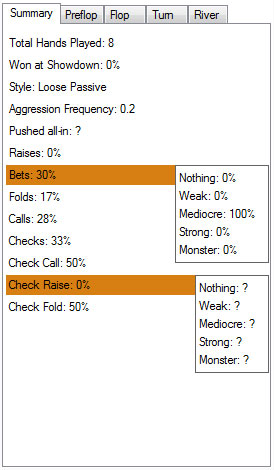
Just as raising presents a conundrum in terms of how much to bet, re-raising is challenging in the same way. Many sources agree that you should re-raise about three times the previous bet, plus any callers. If someone before you bets 300 and there are no callers, you would bet 900. If there was one caller, you would bet 1200 (900 + 300), if there were two callers, you'd bet 1500 (900 + 300 + 300), and so on.
Check-raising
Check-raising is an incredibly useful tactic that is employed in poker games all the time (especially games with heavy betting, like Texas Hold'em, Stud, and Omaha). When you check-raise, you check on a good hand (one that you could have safely raised on) and hope that someone who comes after you raises. Obviously, this only works if you have an early position. By checking, you imply that you have a weak hand, and other players are more confident about their own hands, which will often lead them to bid when they shouldn't. Once the other player has raised, you re-raise, which forces your opponent either to fold, which they probably won't, since they're already pot committed, or call with a hand that is probably weaker than yours. The check-raise offers players in early position the ability to slow play strong hands, which helps to even out the disadvantages of being in poor position.
To limp in poker is to bet the absolute minimum needed to stay in a hand. Limping is often used when the little blind simply calls the big blind instead of raising. It's also known as limp in, flat call, or calling the blind.
An open limp is when the first player to enter the pot preflop bets only the amount of the big blind, the minimum bet. The under the gun position is one that is most likely to open limp to see how the rest of the table will be playing their hands.

Limping is considered to be weak and passive play and is seen more among beginning poker players rather than experienced players, who prefer to open with a raise if they have a hand they wish to play.
Small Blind Limp
An example of the small blind limp is being dealt 8-9 offsuit in the small blind. All of the players before you fold so only the big blind and you will be in the hand if you limp in. You place the minimum bet in hopes that the big blind will simply check and you'll be able to see a cheap flop.
By limping in from the small blind, you risk that the big blind will raise and you'll have to decide whether to match it to see the flop. However, it is a cheap investment as you've already had to bet half of the amount of the big blind if you had folded rather than limped in.
If you have a strong starting hand when in the small blind, limping would be a weak or passive move. But if the big blind raises, you have the choice of reraising and sweetening the pot. However, that also signals that you have a strong hand, perhaps A-A.


A small blind limp with a strong hand can be a tactic to use against an aggressive player in the big blind. You can anticipate that they will raise and then you have the opportunity to call them and see the flop or to re-raise.

Open Limp
Poker Call Check Raise Fold Meaning
An example of an open limp is that you are the player under the gun and have the first action preflop. The big blind minimum bet is $10, so you place that bet. The action then proceeds around the table and other players have the chance to call, raise, or fold. If everyone folds and the big blind checks, then there are just you two in the pot, plus the $5 from the small blind, who folded.
More often, in the above scenario, one of the other players will raise the bet. You then have the choice to fold, call, or reraise. If you aren't prepared to defend your hand and call the raise, you have wasted chips by limping in.
Poker Call Check Raise Fold Away
From any position, limping in is considered to be a beginner's move and weak or passive play. But you might use it as a tactic if you are prepared to call any raise.